My book Why Religions Work explores religious tolerance issues. It could not be more relevant at the moment with the world in its present state.
This blog has concentrated recently on the wonderful pilgrimages I have been on - to the Holy Land and to Turkey and more recently to Holy Georgia , Greece "In the Steps of St Paul" , Ethiopia and most recently my experiences in Iran.

"If I was allowed another life I would go to all the places of God's Earth. What better way to worship God than to look on all his works?" from The Chains of Heaven: an Ethiopian Romance Philip Marsden

Sunday, 11 December 2016

Iran: A Persian Odyssey - the road to Yazd

ceiling at the Saadi Tomb


We are leaving Shiraz today and have a long journey to Yazd - but first we stop on the outskirts of Shiraz to visit the Tomb of Muslah al-Din Saadi set in its own lovely gardens.

Saadi poetry panel from The Rose Garden
Our guide has a beautiful singing voice and treats us to his interpretation of some of the poet's verses which are portrayed in colourful tiles on the walls in the mausoleum. One is a panel of prose from Golestan or The Rose Garden, written in 1257, one of Saadi's major poetic works. The Rose Garden is a collection of stories and wisdom in eight chapters, with each section representing a flower of the garden. It is still very popular among Iranians and our guide will readily quote and explain passages from the poem which is full of moral guidance.  
the gardens at the Saadi Tomb
Another popular quote from the poet, inspired by his own unhappy marriage, goes thus: "A good wife comes with a good man to dwell - she soon converts his earthly heaven to hell."

There is a man meditating by a pool in the grounds - it is all very peaceful and I would have liked time there myself to savour the peace and quiet.
The loos here are modern and clean - a rare treat here!

We now have a three hour drive to our restaurant for lunch on the way to Yazd - passing Persepolis on the way.
Seat belts are only compulsory here on the main roads out of town and we are told there are police checks on this. Our coach stops to pay a toll, due also from lorries, but from which the cars seem exempt. We have a fascinating lecture on education through Iranian history, from c. 550 BC onwards, to while away the journey - but I cannot take my eyes away from the scenes which unfold through the window on our way - there are so many interesting sights. We follow the 55N towards Esfahan and Tehran but turn off later to the east at Surmaq towards Yazd.

scenery on road to Yazd
It's 24 degrees outside - pleasantly warm for me given the dry heat - with none of the humidity that often makes UK summer heat so unpleasant. The message scrolling across the information bar at the front of the coach includes a safety message about seat belts and a blessing for our journey in the name of Muhammed - also reminding us that bottled water is freely available in the fridge by the back door. We need to drink plenty to avoid dehydration.

A village in the distance prominently flies a huge black flag - we see many of these on our journey - they are marking the mourning month of Moharram, a full 28 days each year commemorating the tragic death of the third Imam, Hossein. This year it covers the month of October - the dates change annually. 

There are still many nomadic settlements dotted around near the road - no doubt they are here to help with the vegetable harvesting. A few rather grand villas in their own green compounds are in stark contrast to the dusty looking sandy coloured stone villages we pass and the nomads' tented settlements.

marble quarry
We're now on a high plain - with the road following the course of a dried out river for some time. There are many concrete irrigation channels here set into the fields - with sluice gate controls - perhaps fed by the new controversial Sivand dam nearby (see 5th December post).
There are a few donkeys - not so common in this part of the world - and most farm compounds seem to have a collection of old tractors and combine harvesters and other farm implements. We still climb, and come above the agricultural zone into a rocky terrain criss-crossed with rough side roads and tracks.

The mountains here are rich in minerals and there is much quarrying activity. We pass a very large marble mine for which the region is famous - as reflected in the wonderful and extensive marble tiling and walls and floors we see in many of the buildings we visit.

At midday we arrive at our turn off towards Yazd, stopping soon for a loo break by a rather magnificent mosque in a small village. 
fresh bread on the bus
Ali buys some fabulous fresh bread in the local shop and we tear and share it on the coach. It is lovely. It is still an hour before lunch and we welcome the stop and the refreshments. We continue to drive further north west and higher into the mountains. The terrain becomes increasingly bleak and barren and villages are few and far between here. We are now 195 km from Shiraz. For a long while we drive through very arid scrubland - but multicoloured rock faces look rich with minerals - looking like the multi spice "cakes" for sale in the spice shops in the Esfahan bazaar we will visit later in the week. A magnificent jagged mountain chain looms out of the haze of dust and heat on our left. The road is very long and straight ahead of us.

A lonely man is litter picking into a large yellow sack seemingly a long way from anywhere. I can only guess that he is finding something with a recyclable value.

snow melt area in otherwise barren landscape
There is much snow up in this area in the winter and the snow melt catchment areas show green and lush, where many fruit trees are cultivated - peach, mango, cherry, pomegranate, grapes, almonds, apples … Otherwise the area is quite barren.
Hunters from Shiraz have decimated the wild life in this area and the countryside to our left is now designated a National Park.
We stop to eat somewhere on the road around Faragheh to Abarkuh but I am not sure where. 
Although the restaurant has a very unprepossessing interior and is geared for tour groups, locals also eat here and the food was very good, the service efficient and friendly. And they made me a lovely veggie dish of aubergine and potato stew, although from later experiences perhaps they just fished the meat out of it! Veggies beware! The low point of the meal was the pre-packaged plastic container of cabbage salad to start - very boring.

mosque along the way
There is another beautiful mosque in the middle of nowhere - 


inside the icetower
the icetower at Abarkuh
and we stop to see the ice tower in Abarkuh. These are large fire -brick domed constructions set deep into the ground and formerly used for ice storage, a version of our own English country estate icehouses. 

There are old caravanserai (inns with central courtyards built for travellers or caravans) along the route here approximately 30 km apart - to facilitate the change of horses and availability of refreshments for the postal service or Royal Road across the country which was introduced by Darius the Great - and was the world's first postal service! It later became part of the Silk Road. 

We drive through pistachio country and see many small pistachio tree plantations. 
Our guide tells us that the road to Yazd attracts camels out of the cold desert at night to the tarmac which has been warmed during the day and retains its heat. For this reason it can be very hazardous to drive at night - sand storms are another hazard.

The small bushes or Camel Thorn here are very slow growing, stabilise the sand, and can be 200 - 300 years old.

We are now going through miles of desert and its totally barren. At Dehshir we turn left towards Taft and approach a mountain range. 
picnic preparations
Soon we stop at the side of the road for another welcome picnic - the driver and guide Ali are really good at putting on these impromptu refreshment stops. They put up table and stools and a paper table cloth, serve coffee and tea from huge flasks filled up by the last hotel, and invariably supply delicious local cake and biscuit delicacies which they have bought along the way. Fabulous. Here we have a lovely mountain view but the road is fast, the litter horrible! Litter is a very real problem all along the open roads; a sad contrast with the pristine cleanliness of the towns and cities.
in the Lion Mountains
It's 4.30 and the sun is getting low in the sky. We climb up into the mountain range - the Lion Mountains - and my ears pop as we descend again - the sun makes gorgeous colours in the mountains as it sets. There are old Zoroastrian villages to the west of the road - they still have their fire towers and fire festivals take place every year in January apparently. 

Eagle Rock
The Lion Mountains separate Yazd from the scorching hot central desert where the temperature can climb into the 70s, so they are essential to keep Yazd significantly cooler, albeit still up to 50 degrees in the height of summer. The locals tend to have small houses here in the mountains to escape the worst of the summer temperatures. This is a big pomegranate and walnut growing area, with some saffron also. Chicken in walnut sauce is a popular dish here. The wildlife here is protected - wildgoats (I saw a small herd on the mountain side), hyena, wolves, foxes, cheetahs, vultures.

We pass Eagle Rock - some imagination is needed! And the mountain range is now very dramatic in the setting sun. The lights of Yazd appear in the distant haze and soon we are at our hotel. Yazd is at an altitude of 1125m and 677 km to Tehran.

for more on the poet Saadi see http://www.ircv.org/download/Sample_Beyond_Poetry.pdf and 
traditional restaurant in Yazd

traditional restaurant in Yazd
 We enjoy our evening meal in a traditional restaurant in Yazd -  the Fahadan Mehr Hotel Restaurant - we are taken by coach - our poor driver after such a long day already - he is a hero! There is a parrot to welcome us!


Thursday, 8 December 2016

Iran: A Persian Odyssey - Persepolis and Naqsh-e Rostam

three  of the four tombs at Naqsh-e Rostam


detail from panel at Naqsh-e Rostam
From Pasargadae we make our way to the Naqsh-e Rostam tombs near Persepolis - four dramatic Achaemenid Empire (550-330BCE) tombs carved high into the rock face above us (the name was given by locals - Naqsh means picture and Rostam was a legendary Persian warrior). The tombs are probably those of Darius II (died 405 BCE), Artaxerxes I (died 424 BCE), Darius the Great (died 484 BCE) and lastly, on the far right, Xerxes I (d. 465 BCE) or Xerxes II (d. 423 BCE). Below the tombs are 7 beautifully carved stone panels from the Sassanid period - (224 - 658 CE). These all need time - panels and tombs alike - to really study and interpret their full magnitude. It is altogether an incredible place, and one not to be missed on any tour. A pair of binoculars was a definite asset here to more fully appreciate the detail high above us.
12.6m high Zoroaster's shrine at Naqsh-e Rostam
its function a mystery

After an excellent buffet lunch at the Laneh-e Tavoos garden restaurant nearby, we are soon off to Persepolis, probably the most important ancient site in Iran for all those interested in the history of the Persian Empire. Founded by Darius the Great around 515 BCE, the Achaemenid Kings received their subjects and generally ran their empire from here. Then Alexander the Great came and burnt it all to the ground. The ruins are still exceptional.     

Of course by the time we arrived after all that we had already seen today it was early afternoon - our visit lasted from 2.30 until 5.30 - some say early morning is best for the light, but we benefited from less crowding and a lovely red colour to the ruins as the sun went down.

detail at Persepolis
We were only allowed to take the tiniest bags into the site, such as money and camera, and were advised to leave everything else in the coach, or bags must otherwise be left with security at the entrance.


part of the famous eastern Apadana staircase at Persepolis
this side  shows envoys from 23 subject nations bringing gifts


There is a good souvenir shop but I had left my money on the bus! And purchases have to be made on leaving the site, not before. So the shop actually missed out on our Rials which we are all itching to spend!


And the toilets at the entrance were pretty grim - even the local ladies and children thought so.
While most of the group went straight to the café on the site at the end of the trip, six of us climbed up to view at close hand one of the royal tombs high above the ruins. Not only was this interesting, but a fabulous panoramic view of the site was our reward. There are four royal tombs up here, two of which we can easily access, those of Artaxerxes II (d. 358 BCE) and Artaxerxes III (d. 338 BCE).  

panorama of Persepolis from royal tombs above
The drinks at the café nestling below us were very expensive when we clambered down to it, although it was a very pleasant place to sit and relax at the end of a hot day. The toilets at this end of the site were even grimmer than those in the car park at the entrance! But don't let that put any one off visiting such an incredible site.

As we leave many of the Iranian families were parking up at the side of the road and disappearing into the adjoining woods to picnic, lighting fires, spreading blankets out and no doubt cooking kebabs - a firm picnic favourite here. As I have said before, this is an Iranian passion. They will picnic just about anywhere, and in many places there are special shaded picnic shelters for the purpose. And they take all their litter away with them, leaving the place as clean as they found it.
an eagle griffin or Homa - auspicious bird - adopted
as symbol of Iranian National airline. 
It has been a very long day, but what a rewarding one! Tomorrow we are off on the long drive to Yazd for the famous Zoroastrian Towers of Silence, but first we will visit the Tomb of the Poet Saadi in its beautiful gardens and will be treated to some soulful singing from our guide...
For much further on information on Persepolis see:


heading home from Persepolis at day's end

Monday, 5 December 2016

Iran - A Persian Odyssey - Pasargadae

ice blocks for the fresh fish
Shiraz at 6am still sleeps - except for the solitary man with his broom sweeping the car park area at the front of the hotel. The roads are empty. A pink tinge glows over the mountains in front of the hotel, below a clear blue sky. It is going to be another lovely day. I am breakfasting early - in glorious peace after the unseemly and disorganized scrimmage between all the different tourist groups in the breakfast room yesterday. 
Shiraz - and indeed Iran - is full of tourist groups, mostly following much the same trail from South to North as ourselves - and mostly British, German, French and Australian it seems. And it is easy to see why - with so many wonderful experiences on offer in this beautiful, friendly and safe country. But this early in the morning the man who cooks the delicious filled omelettes to order is not yet at his station. Never mind - I value the quiet. 
the Quran Gate - new hotel looms above it!
Five minutes before we are due to leave at 7.30 for Pasargadae I spill cough mixture down the front of my clean shirt! I'm still suffering the after effects of a cold I picked up before leaving England. Thank goodness for lots of cold water and the hotel hairdryer! All is restored without having to change my clothes. We settle into our coach seats for the 100 km drive. I am happy to be given the opportunity to observe the general environment around us on the trip - all full of interest.

We are off today to the world heritage sites of Pasargadae and Persepolis.

The roads are still quiet - how different from the motorways around my own home where they are already overcrowded nowadays at 5am! 
Huge blocks of ice are being delivered to a fish shop where they are cut up on the pavement before taking in to pack around the piles of fresh fish. 

onion pickers
On the Northern outskirts of Shiraz we drive past the Quran Gate (Darvazeh-e Quran), rebuilt in the 1950s by a local benefactor after the original 10th century gatehouse, built by Karim Khan Zand to house a Quran to bless departing travellers, had to make way for road expansion. This is next to the relative eyesore of the massive new 5* Shiraz Hotel. So we make it out of town on to the main highway. There is much money being spent here on new road construction. The mountainous landscape is barren and sandy.

Soon we see the bad litter on the roadside and in the laybys. This is such a contrast from the pristine litter free and clean town we have left. I'm dismayed and disillusioned.

nomads and goats
flock of Nomad goats on the road to Pasargadae
Then we drive into an altogether more green and fertile area - there are small pine tree plantations and green fields, workers sitting on rugs by the side of the road picnicking, perhaps breakfasting before they start work, picking the tomatoes which are ripe and bright red and truly delicious. Other crops include maize, sunflowers, sugar beet, cotton, cabbages, sack loads of onions and more. There is also wheat, being harvested by a small old combine harvester. The herds of goats find plenty left on the picked fields. A web of irrigation channels maintains the water supply to the crops but the river alongside the road is totally dry. Huge water melons are being sold out of the back of small lorries at the side of the road, small tents nearby which presumably provided overnight camping for the vendors. Four professional looking cyclists stop by the side of the road - a very rare sight indeed on these open main roads. 

camel for the tourists at Pasargadae
A large flock of sheep or goats is being herded along the side of the road by nomads, the settlements of khaki tents visible along the way. Our guide tells me that the government are trying to settle these nomadic tribes into more permanent accommodation but with limited success apparently. 
The mountain range here reminds me very much of the South East Turkey mountains close to the Syrian border which we visited back in 2013 on our Turkish pilgrimage.

We pass close to the Sivand Dam, started in 2007, the cause of much controversy and concern over its possible effects on the great monuments of Pasargadae and Persepolis, due to worries over flooding of these precious sites and also the effect of the increased humidity from the  reservoir on the life of the remains, particularly at Pasargadae.

relief detail at Pasargadae
So we arrive at the UNESCO World Heritage site of the ancient Persian city of Pasargadae - capital of the Achaemenid Empire under Cyrus the Great who had ordered its construction (559–530 BC) and where he is buried. The coach turns down a long tree lined avenue off the main road past a restaurant of same name, the road lined with pictures of martyrs from the Iran Iraq war.

This is a vast area of which little remains - it would have been very beautiful with irrigated gardens full of roses and trees and nightingales. Again I am reminded of the nightingales as we walked up to the monastery in SE Turkey close to the Syrian border in 2013. 


archaelogists at work Private Palace Pasargadae
We start with the gate house - and finish with the Private Palace, where archaeologists are hard at work. Then we make our way to what in the distance looks like a cement factory. It turns out to be what is locally known as Solomon's Prison - it seems no one knows its true purpose. There are a few theories including that it may be the tomb of Cambyses I father of Cyrus the Great.
Solomon's Prison
Encased in clever coloured scaffolding to blend in to its surroundings, plenty of small birds have made their home here but the guide cannot name them. Nearly 500 species of bird have been identified in Iran 1971 Ramsar Convention signed in Iran at Ramsar specifically for Wetlands conservation and the protection of birdlife but they haven't seemingly done very much lately to support its aims.
the citadel at Pasargadae
We then make our way by coach to the citadel fortification on the top of the hill. This would have been similar to the Athenian Acropolis in its structure and position. A few of us sprint up to the top for the views.
tomb of Cyrus the Great at Pasargadae
Our final stop here is to look more closely at the tomb of Cyrus the Great. During our visit to Iran there were protests at the Cyrus monument; but we managed to avoid them.

We leave the site past the Caravanserai of Mozaffari, built during the short lived Mozaffari dynasty 1314-1393 set up by a commander from the Mongol army who seized control over central Iran.


There is more detailed archaeological info to be found online


picnic set up in the shade at Pasargadae

Friday, 2 December 2016

Iran: A Persian Odyssey - Shiraz contd.

we walk through Shiraz to the Citadel

the Citadel Shiraz
 After lunch on our first full day in Shiraz, we walk through the streets to the eighteenth century Citadel fortification Arg-e Karim Khan Zand and its bath house. The 15m towers at the four corners have pretty brick patterning and inside can be found the old bathhouse, pleasant central gardens, and a museum.


The huge tiled panel over the entrance shows the famous Persian warrior Rostam fighting the white devil Deev, from the long epic poem Shahnameh written by the Persian eleventh century poet Ferdowski.
our first picnic and gorgeous Iranian cakes

Picnicking is an Iranian institution and they have perfected it to an art form. Everywhere we travel we see families picnicking - by the side of the road, in gardens, at special picnic sites, at viewpoints, even in car parks. The blankets are spread out, shoes left at the edges, and family groups kneel and sit cross legged enjoying this most sociable of gatherings.
all we get to see of the church of
Simon the Zealot

After coming out of the citadel we are to experience the first of many picnics back at the coach. We soon discover that the tour buses, guides and drivers are all geared up for this always welcome refreshment. They invariably produced delicious local cakes and biscuits to supplement the coffee and tea served from large thermos flasks replenished daily at the hotels.

Suitably refreshed, we can only walk past and glimpse the church of Simon the Zealot. Simon was martyred in Iran, and the church is apparently open for all on Sundays, but not at other times it seems. There is also a Zoroastrian fire temple and an Armenian Christian Church in Shiraz, but again access is not straightforward.

steps lead up to the Tomb of Hafeiah
Our final visit of the day is to the Tomb of Hafeziah, the much loved fourteenth century Shirazi love poet. The tomb is beneath an octagonal kiosk surrounded by pleasant gardens, and is much visited by Iranian families and tourists alike. The Iranians love poetry and revere their own poets, often able to quote large passages from the best known works.
As we leave we are approached by a man with a canary - for a small sum, the canary will randomly pick a card from a collection - the chosen couplet from Hafez's anthology The Divan, is a charming alternative to our horoscope.

fortune telling budgie
Supper tonight is at Shatar Abbas One - they were making bread and pastries as we went in. As a result the bread was lovely and fresh. The veggie option was a plate of sliced fried peppers which was quite unimaginative - the others had the usual meat kebabs. Tea was a very long time coming after the meal.


Some of us walk back through the extensive Azadi Park to our hotel. Even late at night it is relaxed and friendly with quite young families strolling, and young men playing board games at tables. It has been a very pleasant first day and introduction to this incredible country. And each day seems to be better than the last. 


Tomorrow we will visit Persepolis.

Tuesday, 29 November 2016

Iran: A Persian Odyssey - a day in Shiraz


At the mosque
stunning stained glass winter prayer hall
at Nasir-al-Molk mosque 


The first thing I notice from the coach as we drive through Shiraz is how clean the streets are - swept and hosed regularly. Many days later in Tehran I see many men in high viz vests who tour the streets on bicycles and motor bikes with besom brooms and continually sweep where needed. Sadly the main roads between the towns are a very different story, strewn sometimes with quite disgraceful litter. But who are we to talk in the UK? Litter seems to be a global scourge, and one which I find deeply depressing.
winter prayer hall Nasir-al-Molk mosque
Shiraz is surrounded by mountains - looking very stark from my hotel window, dotted with clusters of conifers. The traffic is bad - and seems somewhat chaotic with little lane discipline - in fact it looks a bit of a free for all! White cars predominate. The Ayatollah Khomeini looks down upon us from street posters everywhere! Over the years since the revolution his image has increasingly changed from severe to benign, the black beard increasingly portrayed as white and his face softer, even slightly smiling. Everyone we meet seems very friendly and full of smiles.
mihrab at Nasir-al-Molk mosque
We pass the citadel which we will visit later in the day. It is hot, but a dry heat so not so uncomfortable. In fact I am very happy with it. Roundabouts look very pretty and well tended, often decorated with neat rows of ornamental cabbages, which are propagated at the Shiraz municipal nurseries in the gardens at the Law Faculty of the University.
We walk through the Vakil bazaar. Vakil means "regent", the bazaar built as it was by Karim Khan, regent to the last Safavids (1501-1736), their rule reflected in the magnificence and wealth of the stunning architecture we later enjoy in Esfahan.  Soon we arrive at the 
the cow well
Masjed-e Nasir-al-Molk, a very charming nineteenth century mosque, said to be one of the most elegant and photographed mosques in Southern Iran. The deep blue tiling is wonderful, the stone cable-spiral columns most imposing, the colourful stained glass in the winter prayer hall playing beautiful patterns down on to the floor. We also see there, just off the opposite prayer hall, the cow well, where cows walked downhill to raise the water.


the winter prayer hall Masjed
Nasir-al-Molk
So back along the streets, back through the bazaar to lunch, at the Sharzeh Traditional Restaurant in Vakil Street; as with so many Iranian restaurants it seems, this is downstairs, and is very popular with locals. There is a renowned salad bar with amazing spread, which would have satisfied me for lunch - but they make me a huge plate of stir fried vegetables - very tasty but just too much and a little boring after a while. Nevertheless a good place to eat. 

plates in the bazaar

Saturday, 26 November 2016

Iran: A Persian Odyssey - we arrive in Shiraz

Wednesday 19th October; the day our trip to Iran with McCabe Travel begins. 

street scene Shiraz 
tobacco for sale
 We have been looking forward to this with eager anticipation for so long. The ladies of our 20 strong group have been agonizing for weeks over what they can wear - to make sure they comply with the strict hijab rules imposed by the Islamic Republic of Iran. We all have our varied and colourful headscarves, with a mix of tunic dresses, long shirts and trousers, the idea being that arms and legs must be covered, and body contours not accentuated in figure hugging clothes. I am comfortable in a mixture of my sons' longer shirts and my own mid-thigh to knee length long sleeved tunic dresses over a mixture of baggy cotton trousers I bought in Cambodia a couple of years ago and a pair of denim jeans. Others wear Indian style tunics and trousers in the Salwar Kameez style or similar and look smarter than any of the rest of us. The men are lucky - short sleeved T shirts and jeans seem acceptable everywhere - although sleeveless T shirts would not be normally allowed in mosques for example.
street scene Shiraz
British Airways have only just announced a resumption of direct flights so we go by Turkish Airlines from Heathrow to Shiraz with a change in Istanbul - an overall travel time of about 10 hours. London is three and a half ahead of Tehran. Although the journey seems long and tedious in no way can this be blamed on Turkish Airlines who look after us very well. The veggie option is excellent on both planes and I enjoy watching Maggie Smith in Alan Bennett's The Lady in the Van - an excellent film which helps while away some of the time. Coming through customs at Shiraz airport is somewhat chaotic with little orderly queuing - but we all get through the security here eventually, are met by our superb guide Ali and are soon introduced to our equally splendid - and incredibly handsome driver Mori.

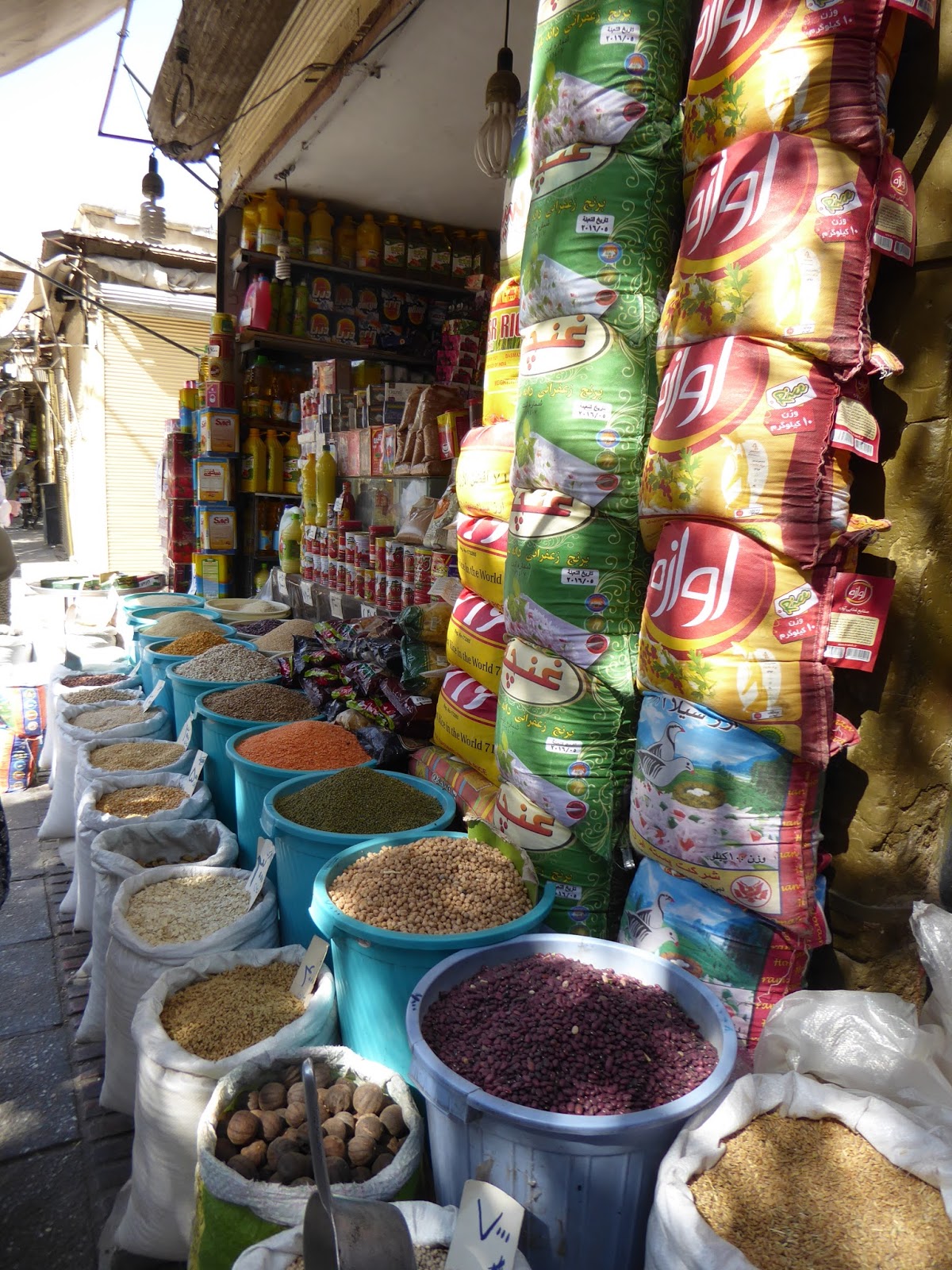
shiraz bazaar
Driving through the streets of Shiraz at midnight there are many pavement shops, still very active at this late hour. We finally arrive at our hotel Homa in Shiraz at 1 am - all incredibly travel weary - for a short sleep before being up again at 7am for breakfast, an introductory group meeting and off at 10.30 in the coach for a city tour. And so much to see in the days ahead as we explore Shiraz before traveling Northwards over eleven days via Persepolis to Yazd, Isfahan, Kashan and Tehran, and seeing much more besides along the way. 

Wednesday, 2 November 2016

Iran: A Persian Odyssey

I have just returned from an amazing trip to Iran, touring from Shiraz in the South to Tehran in the North via Yazd, Esfahan (surely one of the most beautiful cities in the world), and Kashan, seeing wonderful sights all along the way. Watch this space as I hope to begin posting a detailed blog of my experiences and share many photos before too long.